
Why Inbound Marketing Is Changing the Way Businesses Grow
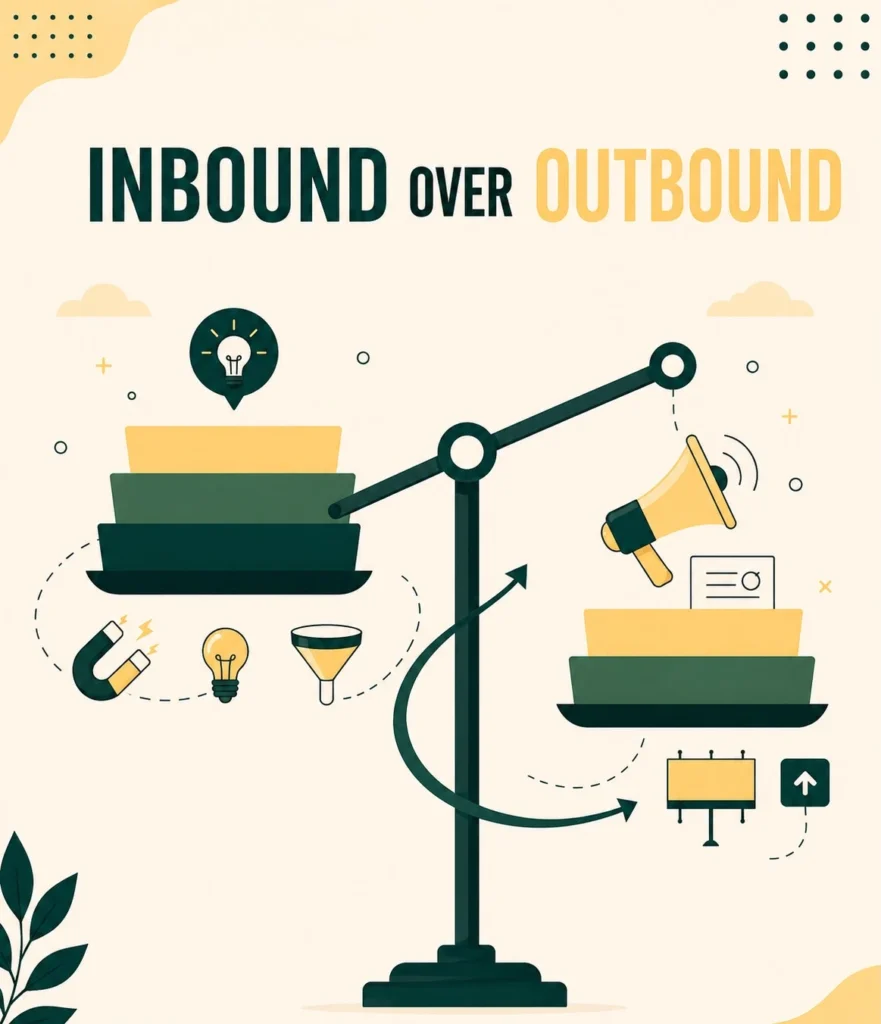
The way people discover and choose businesses has changed significantly. Customers no longer depend only on traditional advertisements to decide what to buy. They search online, compare different options, read reviews, watch videos, explore social media, and look for useful information before making a decision.
This change has made inbound marketing an important approach for businesses that want to attract customers through valuable and relevant content rather than relying entirely on direct promotional messages.
Instead of interrupting people with advertisements, inbound marketing focuses on creating experiences that encourage potential customers to discover a brand, learn from it, develop trust, and eventually take action.
For businesses, this approach can create a more sustainable connection between marketing activities and long-term customer relationships.
What Is Inbound Marketing?
Inbound marketing is a customer-focused marketing approach that attracts people by providing content and experiences that are relevant to their needs.
A typical inbound journey can look like:
Attract → Engage → Build Trust → Convert → Retain
For example, someone searching for information about improving their website’s Google ranking may discover an SEO blog. After finding the information useful, they may explore the company’s services, follow its social media pages, subscribe to updates, or contact the business.
The initial interaction may not result in an immediate sale, but useful content can create awareness and establish a relationship that develops over time.
1. Customers Are Looking for Information Before Buying
Modern customers often conduct their own research before contacting a business.
They may search questions such as:
Which product is suitable for my needs?
How much does the service cost?
Is this brand trustworthy?
What are the alternatives?
How does this product work?
What should I consider before purchasing?
This creates an opportunity for businesses to become useful sources of information.
Instead of waiting until a customer is ready to buy, businesses can provide helpful content during the research stage. This can bring potential customers into the brand’s ecosystem earlier in their decision-making process.
2. Valuable Content Can Attract the Right Audience
Content is one of the strongest foundations of inbound marketing.
Businesses can create different types of content depending on their audience and industry, including:
Blog articles
How-to guides
Social media posts
Instagram Reels
Videos
Case studies
E-books
FAQs
Email newsletters
The purpose should not be to create content simply to fill a content calendar.
Good inbound content addresses a real customer need.
For example, a digital marketing agency could publish an article explaining common SEO mistakes made by small businesses. Someone searching for a solution to those problems may discover the article and become familiar with the agency.
This is how content can turn search visibility into a potential business opportunity.
3. SEO Makes Inbound Marketing More Discoverable
Search engine optimization and inbound marketing work closely together.
Even a well-written article has limited value if the intended audience cannot find it.
SEO helps businesses improve the visibility of useful content in search engines by focusing on factors such as search intent, relevant keywords, website structure, technical performance, content quality, and user experience.
For example, a local business can create content around questions and services that customers commonly search for in its target location.
The focus should be on satisfying the user’s search intent rather than simply inserting keywords repeatedly.
When SEO and useful content work together, businesses can attract people who are already searching for information related to their products or services.
4. Inbound Marketing Builds Trust Over Time
A customer may not be ready to purchase the first time they discover a brand.
They may need more information before making a decision.
Consistently publishing accurate and useful content gives businesses multiple opportunities to demonstrate their knowledge.
A business can build credibility by:
Sharing practical expertise
Answering common questions
Explaining its processes
Providing accurate information
Showing real examples
Publishing customer experiences
Addressing limitations honestly
For professional service businesses, this is particularly valuable because customers often want to understand the expertise behind the service before making an investment.
Trust is built through repeated positive interactions, not through a single promotional message.
5. Inbound Marketing Supports the Entire Customer Journey
Inbound marketing is not limited to attracting website visitors.
It can support customers at different stages of their decision-making process.
Awareness
The customer discovers a brand through search, social media, video, or another content channel.
Consideration
The customer begins comparing solutions and looking for more detailed information.
Decision
The customer evaluates the business based on factors such as expertise, reviews, pricing, service quality, and credibility.
Retention
After purchasing, useful communication and customer support can help maintain the relationship.
This means the same inbound strategy can contribute to both customer acquisition and long-term relationship building.
6. Personalization Makes Content More Relevant
Not every customer has the same needs.
A first-time visitor may need basic information, while someone who has already interacted with a business may be looking for pricing, comparisons, demonstrations, or specific solutions.
Inbound marketing allows businesses to create different content for different audiences.
For example:
New visitors: Educational blog posts and introductory videos.
Interested prospects: Product comparisons, case studies, and detailed guides.
Potential buyers: FAQs, demonstrations, testimonials, and service information.
Existing customers: Tutorials, support content, updates, and loyalty communication.
Providing the right information at the appropriate stage can make the customer experience more useful.
7. Social Media Strengthens Inbound Marketing
Social media has become an important distribution channel for inbound content.
A detailed blog article can be transformed into multiple social media formats, such as:
Short-form videos
Carousel posts
Infographics
Quick tips
Stories
LinkedIn posts
This allows businesses to extend the life of their content and reach audiences across different platforms.
For example, a long-form article about SEO can become a series of short videos explaining individual SEO concepts. This creates multiple opportunities for people to discover the business.
The goal is not to copy and paste the same content everywhere. Instead, the core idea can be adapted to suit the behaviour and expectations of each platform.
8. Email Marketing Helps Businesses Nurture Leads
Not every website visitor will become a customer immediately.
Email marketing can help businesses maintain communication with people who have voluntarily subscribed to receive updates or useful information.
Businesses can use email to share:
Educational resources
New content
Product information
Industry updates
Special offers
Helpful tips
Company updates
A well-planned email strategy keeps the relationship active without requiring the customer to discover the business again from the beginning.
9. Data Helps Improve Inbound Marketing
One advantage of digital marketing is the ability to measure performance.
Businesses can analyse metrics such as:
Website traffic
Organic search visibility
Content engagement
Lead generation
Email engagement
Conversion rates
Customer acquisition sources
These insights can help marketers understand which content attracts visitors and which activities contribute to business goals.
For example, if an educational article consistently attracts relevant visitors but generates very few enquiries, the business can review its calls to action, internal links, service information, and conversion journey.
This makes inbound marketing an ongoing process rather than a one-time campaign.
10. AI Is Supporting Modern Inbound Marketing
AI tools are increasingly being used to support different areas of content and digital marketing.
They can assist marketers with:
Content research
Topic ideation
Content planning
Drafting
Content repurposing
Audience analysis
Performance analysis
However, AI-generated content should always be reviewed by people with appropriate subject knowledge.
Businesses should verify facts, add real experience, maintain their own brand voice, and ensure that content genuinely answers customer questions.
The strongest inbound content combines technology with human expertise and practical knowledge.
How Businesses Can Build an Effective Inbound Marketing Strategy
A successful inbound strategy does not require businesses to be present on every platform.
Instead, businesses can start with a few fundamental steps:
Understand the Target Audience
Identify the problems, questions, interests, and purchasing concerns of the people you want to reach.
Research Search Intent
Understand what people are actually trying to accomplish when they search for information related to your business.
Create Helpful Content
Develop content that answers real questions and provides practical value.
Optimize for Search
Use relevant keywords, logical content structure, useful headings, internal links, and strong user experience.
Promote the Content
Use appropriate social media, email, and other channels to help the content reach the intended audience.
Create Clear Conversion Paths
Give interested visitors an obvious next step, such as contacting the business, requesting information, booking a consultation, or exploring a product.
Measure and Improve
Review performance regularly and improve content based on actual audience behaviour and business results.
Common Inbound Marketing Mistakes
Although inbound marketing can be highly effective, businesses can struggle when they approach it without a clear strategy.
Common mistakes include:
Creating content without understanding the audience
Focusing only on keywords instead of search intent
Publishing content inconsistently
Producing overly promotional articles
Ignoring existing customers
Not adding clear calls to action
Failing to update outdated information
Measuring only traffic instead of business outcomes
A strong inbound strategy should focus on quality, relevance, consistency, and measurable objectives.
The Future of Inbound Marketing
As customers become more informed and digital channels continue to evolve, businesses need to think beyond traditional advertising.
People increasingly expect brands to provide useful information, respond to questions, demonstrate expertise, and offer a smooth digital experience.
This makes inbound marketing increasingly relevant for businesses of different sizes.
The future is not simply about producing more content. It is about creating better content for specific audiences at the right stage of their customer journey.
Final Thoughts
Why Inbound Marketing Is Changing the Way Businesses Grow
Inbound marketing has changed the relationship between businesses and their customers. Instead of depending entirely on promotional messages, businesses can attract potential customers by answering questions, solving problems, sharing expertise, and creating useful digital experiences.
When SEO, content marketing, social media, email marketing, and conversion strategies work together, inbound marketing can create a continuous path from discovery to trust and from trust to business growth.
For businesses looking to build a stronger digital presence, the focus should not simply be on getting more visitors. The bigger opportunity is to attract the right audience, provide genuine value, establish credibility, and create experiences that encourage people to take the next step.
In a digital environment where customers have more choices than ever, being helpful, relevant, and trustworthy can become a meaningful competitive advantage.
Pingback: blog – thareeqmv.com